Dua for Forgiveness in Islam
Complete collection of authentic duas for forgiveness (Istighfar) with Arabic text, transliteration, English translation, and verified hadith references — for every occasion.
The Mercy of Allah is Greater Than Any Sin
In Islam, dua for forgiveness — known as Istighfar (الاستغفار) — is one of the most beloved acts of worship. Allah ﷻ promises in the Quran: “And whoever does evil or wrongs himself but then seeks forgiveness of Allah will find Allah Forgiving and Merciful.” (Quran 4:110). No sin is too great for Allah’s mercy when approached with sincere Tawbah (repentance).
The Prophet Muhammad ﷺ, despite being sinless, sought forgiveness more than 70 times a day — teaching the Ummah that Istighfar is not merely for major sins, but a constant state of the believer’s heart. It purifies the soul, lifts hardship, opens doors of provision (Rizq), and draws one closer to Allah.
This page compiles the most important and authentic duas for forgiveness from the Quran and Sunnah, along with guidance on Tawbah, the best times to seek forgiveness, and practical steps for maintaining a daily habit of Istighfar.
→ Explore our related collection: Daily Duas & Morning Adhkar | Quranic Duas | Dhikr & Tasbeeh
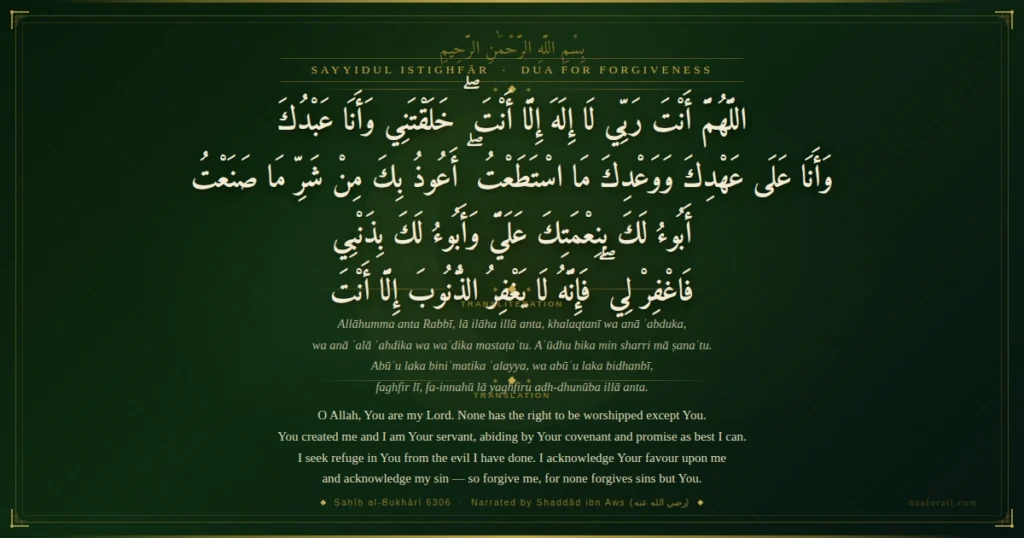
Sayyidul Istighfar — Master of Forgiveness
The greatest dua for seeking forgiveness, according to the Prophet ﷺ. Recite it sincerely every morning and evening.
Authentic Duas for Forgiveness from Quran & Sunnah
All duas are sourced from the Quran or Sahih (authentic) hadith collections. Scroll or tap any card to read the full dua.
The 4 Conditions of Sincere Tawbah (Repentance)
For forgiveness to be accepted, repentance must meet specific conditions outlined by Islamic scholars based on Quran and Sunnah.
📊 The Pillars of Accepted Tawbah
Based on the consensus of Islamic scholarship from Imam Al-Nawawi and Ibn Qudamah (رحمهم الله)
🌿 What If I Keep Repeating the Same Sin?
Many Muslims worry that repeated repentance for the same sin is not accepted. This is a misconception. The Prophet ﷺ said in a Hadith Qudsi: “A servant commits a sin and says: ‘O Allah forgive me.’ And Allah says: ‘My servant has committed a sin and has known that he has a Lord Who forgives sins and punishes for them.’ Then he sins again and says: ‘O Lord, forgive me.’ And Allah says: ‘My servant has committed a sin…’ Then he sins a third time… Allah says: ‘Do what you will, for I have forgiven you.'” (Sahih Muslim 2758). Keep returning to Allah — the door of Tawbah is always open until the soul reaches the throat at death.
See also: Duas for Healing | Masnoon Duas from the Sunnah | Islamic Knowledge Articles
Best Times to Make Dua for Forgiveness
Certain moments are especially blessed — when Allah’s mercy descends and duas are more readily accepted.
⏰ Sacred Windows for Istighfar
Based on authentic Quranic verses and Prophetic hadiths
Allah’s Names Related to Forgiveness & Mercy
Call upon Allah by His beautiful names (Al-Asma ul-Husna) when seeking forgiveness. Each name reflects a different dimension of His mercy.
When you recite a dua for forgiveness, begin by praising Allah with His most beautiful names. For example: “Ya Ghaffar, ya Tawwab, ya ‘Afuw — O Most Forgiving, O Acceptor of Repentance, O Pardoner — forgive me.” Invoking these names connects your supplication to the very attributes of Allah that govern forgiveness.
How to Build a Daily Istighfar Habit
🌅 Morning Routine
Start every morning by reciting Sayyidul Istighfar once with full presence of heart, followed by “Astaghfirullah wa atubu ilayh” at least 70 times. The Prophet ﷺ said he sought forgiveness 70 times a day (Bukhari 6307). This takes under 5 minutes but spiritually cleanses the heart before you face the day.
🕌 After Every Salah
As established in Sahih Muslim 591, the Prophet ﷺ would say “Astaghfirullah” three times upon completing each prayer. Build this habit: before picking up your phone or moving, say it three times. Over five daily prayers, that is 15 times per day — a firm foundation.
🌃 Night Forgiveness Dhikr
In the last third of the night — approximately 90 minutes before Fajr — wake for a brief Tahajjud of 2 rak’ahs and make heartfelt Istighfar. If waking is difficult, at minimum recite the dua for sleeping (from our Daily Duas collection) followed by 10 repetitions of Sayyidul Istighfar.
📖 Dhikr Counter
Use a tasbih (prayer beads) or a digital counter to track your Istighfar. Aim for 100 per day — the number the Prophet ﷺ recommended. You can also explore our Dhikr & Tasbeeh Guide for structured daily remembrance plans.
Continue Your Spiritual Journey
Explore more collections from DuaForAll — all verified, all free.
Further Reading from Trusted Scholars
All duas on this page are sourced from the following verified Islamic resources. We encourage you to study further.
- 📚 Sunnah.com — Complete Hadith Database Authority Source
- 📖 Quran.com — Holy Quran with Tafsir Quranic Reference
- 🎓 IslamQA — Conditions of Tawbah (Sheikh Munajjid) Scholar Resource
- ☪️ IslamWeb — Fatwas & Islamic Guidance Fatwa Resource
- 🕌 Dar Al-Iftaa Al-Missriyyah — Official Fatwa Authority Official Authority
Frequently Asked Questions About Dua for Forgiveness
Answers based on authentic hadith and the scholarship of major Islamic authorities.
What is the most powerful dua for forgiveness in Islam? ▼
The most powerful dua for forgiveness is Sayyidul Istighfar — the Master of Seeking Forgiveness. The Prophet ﷺ guaranteed that whoever recites it with conviction in the morning and dies before evening enters Jannah, and vice versa for the evening. (Sahih al-Bukhari 6306). The full text is at the top of this page.
How many times should I say Istighfar (Astaghfirullah)? ▼
The Prophet Muhammad ﷺ would seek forgiveness at least 70 to 100 times every day (Sahih Bukhari 6307 / Sahih Muslim 2702). You can say “Astaghfirullah” or the extended form as often as possible — especially after prayers, in the last third of the night, and on Fridays. There is no maximum — the more, the better.
Can I make dua for forgiveness in English? ▼
Yes. While reciting the Arabic duas is recommended and carries special spiritual weight (as these are the exact words of the Prophet ﷺ and the Quran), making dua in your native language is valid. Allah understands all languages. As you learn, try to memorise the Arabic duas gradually — even one at a time. See our guide for New Muslims for step-by-step help.
What are the conditions of Tawbah (sincere repentance)? ▼
Islamic scholars outline 3–4 main conditions: (1) Immediately stop the sinful act; (2) Feel genuine remorse in the heart; (3) Firmly resolve not to return to the sin; (4) If the sin harmed another person’s rights, make amends — return property, repay debts, or ask for their forgiveness. See our full Tawbah infographic above.
Is there a special dua for forgiveness of major sins? ▼
The Quran in Surah Az-Zumar 39:53 offers the greatest hope: “Say: O My servants who have transgressed against themselves! Despair not of Allah’s mercy — indeed Allah forgives all sins.” There is no sin too great for sincere Tawbah. Sayyidul Istighfar, combined with genuine repentance, is appropriate for any sin. For sins involving another person, however, you must also seek their forgiveness or make restitution.
What is the dua for forgiveness during Ramadan and Laylat al-Qadr? ▼
The Prophet ﷺ specifically taught this dua to Aisha (رضي الله عنها) for Laylat al-Qadr: Allahumma innaka ‘afuwwun tuhibbul ‘afwa fa’fu ‘anni — “O Allah, You are the Pardoner, You love to pardon, so pardon me.” (Tirmidhi 3513, graded Sahih). This dua beautifully invokes Allah’s attribute of pardoning. See all our Ramadan Duas here.
📿 Explore 500+ Verified Duas
Browse our complete collection of authentic Islamic supplications — free, always, for the Ummah.
“And Allah knows and you do not know.” — Quran 2:216 · جَزَاكَ اللَّهُ خَيْرًا for visiting DuaForAll.com