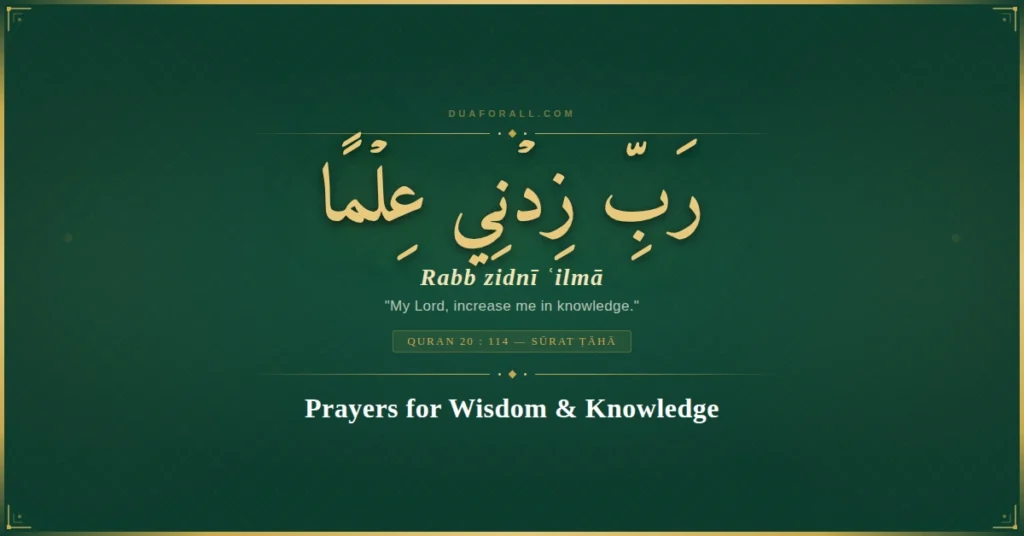
Dua for Wisdom & Knowledge
Islamic Prayers for ‘Ilm & Hikmah
Authentic supplications from the Quran and Sunnah for those who seek beneficial knowledge, wisdom, and clarity of mind — with Arabic text, transliteration, translation, and source citations.
The Islamic Imperative of ‘Ilm & Hikmah
In Islam, knowledge (‘ilm) and wisdom (hikmah) are not merely intellectual virtues — they are acts of worship and a religious obligation. Allah ﷻ revealed the very first word of the Quran as Iqra — “Read!” — placing the pursuit of knowledge at the heart of the Muslim identity from the very beginning of revelation.
The Prophet Muhammad ﷺ said: “Seeking knowledge is an obligation upon every Muslim.” (Ibn Majah, 224). This encompasses both religious knowledge and the beneficial sciences that serve humanity. When paired with sincere dua — supplication to Allah for guidance and understanding — the seeker of knowledge elevates a worldly pursuit into a profoundly spiritual act.
Wisdom (hikmah) goes a step further. Surah Al-Baqarah (2:269) teaches that wisdom is a divine gift: “He grants wisdom to whom He wills, and whoever has been granted wisdom has certainly been given much good.” The duas below are your petition to Allah for both the knowledge of facts and the wisdom to use them righteously.
“Allah will raise those who believe among you and those who are given knowledge by degrees.”
— Quran · Surah Al-Mujadila 58:117 Core Duas for Wisdom & Knowledge
Each supplication below is sourced from the Quran or authenticated Hadith collections. They cover the full spectrum of seeking ‘ilm: from asking for increase in knowledge, to clarity of understanding, to protection from harmful knowledge.
The Four Dimensions of Islamic Knowledge
Islamic scholarship recognises knowledge as a multi-layered pursuit. Understanding these dimensions helps you make targeted supplications and direct your learning purposefully.
What the Quran Says About Knowledge & Wisdom
The Quran contains over 700 verses referencing knowledge, reflection, and understanding. Below are five foundational verses that together articulate Islam’s vision of ‘ilm as both a path to Allah and a means of serving humanity.
1. The First Revelation — Quran 96:1–2
“Read in the name of your Lord who created — created man from a clinging substance.”
— Quran · Surah Al-‘Alaq 96:1–22. The Grant of the Pen — Quran 96:4–5
Allah ﷻ says: “Who taught by the pen — taught man that which he knew not.” (96:4–5). The pen (qalam) is one of the first things Allah created, and teaching humanity was among His first acts of mercy. This establishes knowledge as an act of divine generosity.
3. Wisdom as the Greatest Good — Quran 2:269
“He gives wisdom to whom He wills, and whoever has been given wisdom has certainly been given much good. And none will remember except those of understanding.” (2:269). Scholars explain that hikmah here means placing things in their right place — a quality that makes knowledge transformative.
4. Al-Khidr and the Limitlessness of Knowledge — Quran 18:65–66
When Prophet Musa (AS) sought out Al-Khidr, he asked: “May I follow you so that you teach me from what you have been taught of right conduct?” (18:66). This narrative teaches humility before knowledge: no matter how much one knows, there is always a teacher and always more to learn.
5. Those Who Know and Those Who Don’t — Quran 39:9
Allah poses the rhetorical question: “Are those who know equal to those who do not know?” (39:9). The answer is emphatic: they are not equal. This verse motivates the believer to pursue knowledge as a means of drawing closer to Allah ﷻ.
Best Times to Make Dua for Knowledge
The timing of supplication significantly influences its acceptance. The following moments are established by Hadith as periods when Allah’s mercy is especially close and dua is most likely to be answered.
Frequently Asked Questions
📚 Trusted External Resources
- Sunnah.com — Ibn Majah 251 Authenticated hadith: “O Allah, I ask You for beneficial knowledge…” — full chain and grading. →
- Quran.com — Surah Ta-Ha 20:114 The source verse of Rabbi zidnī ‘ilmā — read with tafsir commentary and multiple translations. →
- IslamQA.info — Virtues of Knowledge Scholarly fatawa on the Islamic obligation to seek knowledge and the etiquettes of the student of ‘ilm. →
- SeekersGuidance.org — Seeking Knowledge Free courses and articles on Islamic sciences — a trusted platform for structured learning of ‘ilm. →
- Yaqeen Institute — The Notion of ‘Ilm in the Quran Academic paper exploring the Quranic concept of knowledge — highly recommended for deeper study. →
Continue Your Journey of Knowledge
Explore our full library of authentic duas and Islamic supplications for every moment of daily life.